
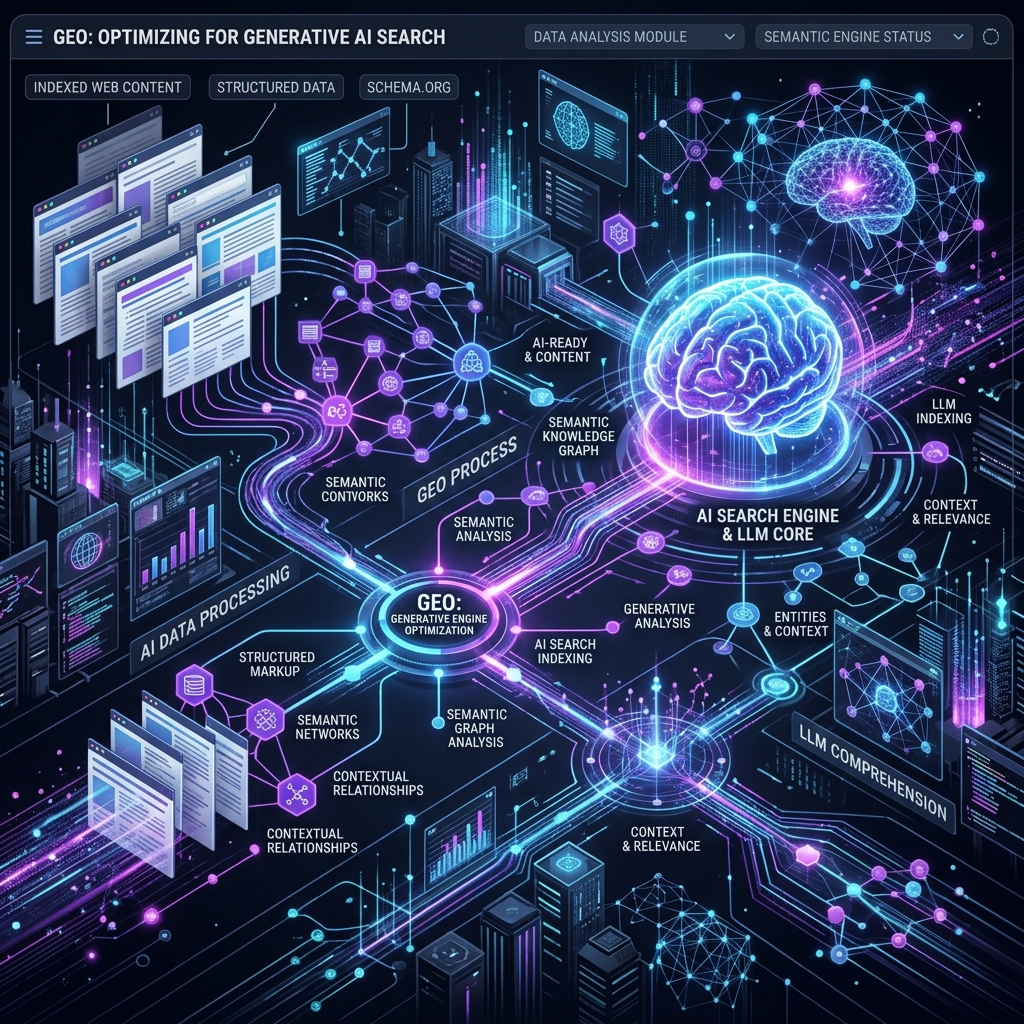
The era of chasing blue links is officially giving way to a new paradigm. In 2026, the rise of Large Language Model (LLM) search engines like Google Gemini, SearchGPT, and Perplexity has transformed how users find information. To remain visible, brands must pivot from traditional Search Engine Optimization (SEO) to Generative Engine Optimization (GEO).
What is Generative Engine Optimization?
Generative Engine Optimization (GEO) is the practice of optimizing digital content so that it is selected, cited, and summarized by LLM-driven search engines. Instead of focusing solely on keyword density, backlink quantity, or meta descriptions to rank high on standard search engine results pages (SERPs), GEO optimizes for how AI models synthesize, evaluate, and present information to answer direct user queries.
"In the generative search era, being indexable is no longer enough. Your brand must be the authoritative source that the AI model trusts to synthesize its answers." — Innogreets Digital Marketing Team
Key Differences Between SEO and GEO
Understanding the core shift in methodologies is critical for marketing survival in 2026:
- From Keywords to Context: Traditional SEO focused heavily on target keywords. GEO focuses on semantic relevance, context, and the comprehensive coverage of user intent.
- From Links to Citations: While backlinks still matter, LLMs prioritize authoritative citations and mentions that explicitly validate factual claims within their generated responses.
- From Clicks to Impressions: Generative search often answers the user's question directly on the interface (zero-click searches). Visibility now relies on being cited as the source in the AI's response panel.
Optimization Strategies for GEO in 2026
To ensure your content is favored by modern search agents, you should focus on several key pillars:
- Factual Precision & Structured Markup: AI search engines love structured JSON-LD data and highly organized schema. Providing unambiguous, structured facts makes it easier for LLMs to extract and verify information.
- Authoritative & Expert Sentiment: Write with deep industry authority. LLM ranking algorithms look for unique perspectives, original statistics, and clear expert sentiment that standard AI rehash tools cannot replicate.
- Cite Sources Explicitly: Just as LLMs cite you, they also value when your content cites reputable external sources, establishing trust in your own site's data.
- Direct Answer Formats: Organize your content to include clear, concise summary blocks, bullet points, and direct answers to common questions at the top of your pages, which AI search engines can easily scrape for snippets.
Conclusion
The transition to Generative Engine Optimization is not a temporary trend; it is the natural evolution of how humanity interacts with the digital world. By restructuring content to be clear, authoritative, structured, and contextually rich, businesses can secure their position as trusted citations in generative search engines. At Innogreets, we are pioneer partners in GEO services, ensuring your brand stays top-of-mind, whether a user is searching on Google or chatting with their favorite AI assistant.